
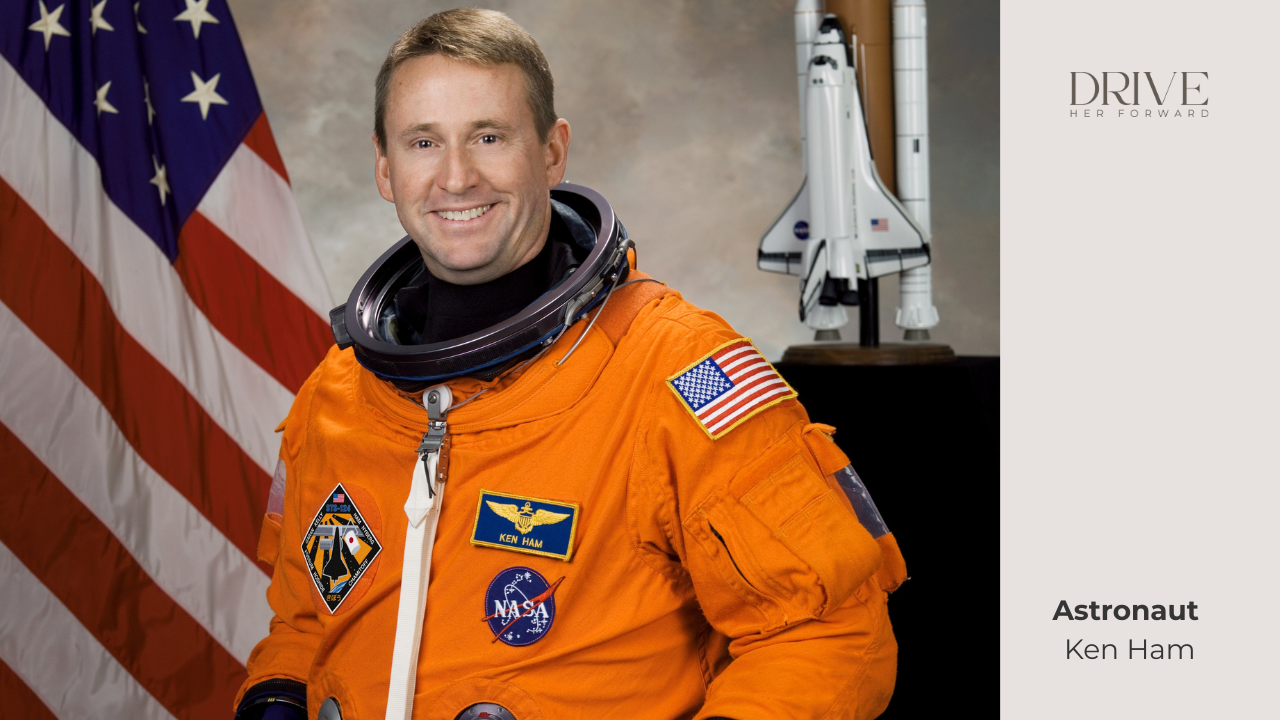
Leadership Under Pressure - A Look Into The Artemis Program with Astronaut Ken Ham
There is a difference between performing at a high level and leading at a high level. Most people are rewarded for execution early in their careers. Fewer are taught how to lead when the stakes are real, the margin for error is thin, and the outcome depends on more than just individual effort.
That is why this conversation matters.
I recently sat down with Ken Ham, a former NASA astronaut. He’s not just a decorated professional with two spaceflights and decades inside one of the most disciplined organizations in the world, he’s also a close friend. That personal connection is exactly why this conversation goes deeper than surface-level insight.
When you listen to how astronauts are trained, how trust is built, and how decisions are made under pressure, you start to see something very clear. Leadership at that level is not about personality or title. It’s about consistency, preparation, and the ability to operate with clarity when it matters most.
This isn’t a conversation about space. It’s a look at the standards behind environments where leadership is non-negotiable and what that can teach all of us about how we show up, make decisions, and lead in our own arenas. With his unique perspective on the world, I am excited to share his thoughts with you.
In spaceflight, your life depends on the people around you. What does real trust look like in that environment, and how is it built?
Trust is built over time and through consistent decision making. A spaceflight crew is assigned at least a year before launch, in some cases, many years. In that time, the crew shares an office together, their schedules are very similar so they learn and practice together. They fly high performance aircraft together which can stress and test their courage and decision making. Commanders have the latitude to schedule other team building activities like multi-week training experiences in the wilderness, guided professionally, to physically and mentally stress each crew member. Through experiences like this, a person gets a glimpse at themselves and their crewmates when they are exhausted, stressed, and even scared. All of this planned training is designed to establish trust and confidence in each other. It works!
You’ve operated in environments where failure isn’t an option. How do you process fear without letting it interfere with execution?
Get this question a lot. I don’t think it is possible for us humans to operate at peak performance in the face of fear. I’ve flown in space with approximately 20 other astronauts & cosmonauts. I have never seen a glimmer of fear on anyone. I believe much of that comes from an abundance of training on how to deal with every conceivable mechanical failure. Yes, there are mechanical failures that there is nothing a crew can do to save (Challenger & Columbia). Think about it though…if something like that is a genuine fear for a crew member, you are definitely in the wrong job. I think a high functioning astronaut transforms fear into genuine excitement. That excitement might be like the last minute of a championship basketball game. …in the ZONE!
From the outside, Artemis looks like a technical milestone. From your perspective, what does this mission really represent, either inside NASA or possibly outside?
Artemis is the beginning of a new Phase. Yes, it looks a lot like Apollo from the outside. Apollo was an unfathomable achievement in its day. That program took tremendous ‘guts’ but it was driven by a space race with a very dangerous opponent. Artemis has a whole different feel. We are doing this as a stepping stone to a very broad future of exploration. I was a new astronaut in 2000 when we delivered the first crew to ISS. We had a wonderful hope that this event would mark a continued human presence in Low Earth Orbit. We had no idea if we would succeed. Well, here we are 26 years later still rockin’. The Artemis program will land humans on the moon…eventually to stay. Think about looking at the moon on any given night knowing that our brothers and sisters are up there doing great things. This is what Artemis represents…a new beginning.
There is considerable attention on the first female astronaut participating in this mission. Within NASA, is this seen as a symbol, a practical decision, or just the outcome of choosing the most qualified candidate?
Above all else, it is choosing highly qualified people. Those choices are validated during astronaut candidate training. Anyone that makes it through selection and basic training, can succeed at most missions. Each individual flight crew has their own unique expertise and capabilities. Each mission has its own demands like robotics, space walking, geology, astrophysics, leadership, etc. Christina was obviously well chosen and filled her roll on the crew with aplomb. Her postflight words to the world about the crew of ‘tiny earth’ (that’s us) were so spot on. Any crew would be honored to have her.
When NASA selects astronauts for missions like Artemis, what separates someone who is technically qualified from someone who is trusted with the mission?
Nothing. They are the same thing, can’t have one without the other. Trust and expertise are equally important.
For women pursuing careers, business ventures, and leadership roles, which lessons from your NASA experience are most relevant to how they should think, make decisions, and lead?
NASA is an extremely professional organization. There is no room for misogyny or unequal treatment. Therefore, the easiest and best path is to simply disregard perceived differences. There are portions of a spaceflight that can require physical strength like space walking (building a spaceship in space). Astronauts have a very good physical training facility. On any given day you can find both men & women grunting it out on the squat rack. It is an astronaut’s job, male or female to be at the peak of their conditioning at all times. That environment is extended to other senior NASA managers and flight directors. Respect and trust comes naturally.
If you had to define one non-negotiable standard that every astronaut lives by—something that determines whether they succeed or fail—what would it be?
The simple ability to be a person others want to be around. Between training for a mission and flying that mission, you can have a new family for many years. The worst condition is if one or more people really don’t like each other. Tolerance, respect, and love are key.
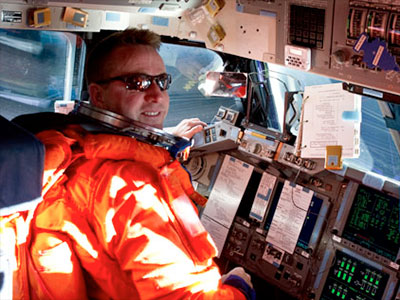
You’ve flown to space twice and spent decades inside NASA. Looking back, what were the moments that actually shaped you as a leader—not the ones people expect, but the ones that changed how you think and operate?
On my first spaceflight, my Commander was a good friend from the Navy. I had been in the Navy (right out of High School) for 15 years before starting at NASA. My friend and Commander taught me to drop the military side of my development thus far and be far more accepting of how people think at large. This was a huge lesson…I have never looked back and it serves me well to this day. On another occasion, as a Commander, I was allowed some say in selecting my own crew. I selected based on competence, energy, humor and friendship. When we were out on a multi-week National Outdoor Leadership School training exercise, the instructors had us maneuver ourselves around a gridwork on the ground in accordance with personality questions. It was a mini Briggs-Myers test. Most of us ended up in the same area. A crew with all the same personality traits is not a great set-up. Different opinions and diversity usually carries the day best. Balance is key in completing a mission. I learned from there that it is OK to float around on the grid and play different roles as a leader. Ask the tough questions you might not normally ask. In doing so, you will learn more about yourself.
You attended the launch in person. Can you explain the energy surrounding the event and what it signified?
As an astronaut, you have the opportunity to experience launches from the outside frequently. They are all powerful and emotional. We had an obnoxious saying, “You aren’t a real American until you see a Space Shuttle launch.” The kind of thing you would never say to a person that had never seen a launch. Simply way too presumptuous. However, when you are standing next to a person watching a launch for the first time, they COMPLETELY get it. It has nothing to do with rah-rah American pride as these days it takes the entire world. What it is about is human achievement. Between engineers, operators, fabricators, trainers, and the giants that built Mercury, Gemini, Apollo there are hundreds of thousands of direct contributors. Now add in the tax payers and voters that chose leaders that chose to explore and you have hundreds of millions. Push that concept around the globe and it really does take Billions to reach for the stars. I had a close friend on Artemis. Witnessing that beast of a rocket leave the earth on a foreign trajectory from the Space Shuttle was profoundly emotional. I gotta stop typing…can’t see the laptop screen.
How does your leadership circling the moon compare with leadership on Earth?
When Navy ships left their shores in the sailing days of old, the Commander had full latitude to train and direct their crew and to make appropriate decisions to accomplish the mission and simply do the right thing. There was no sat phone! When the Artemis crew was on the back side of the Moon, they were on their own. The trust for moments like that was built years before. As we push farther from the Moon, to Mars and beyond, that concept of autonomy will become more and more important. True leadership will be a hallmark. Just ask Captain Kirk.
You have been out of NASA for over a decade, what have you learned since?
Great question. We should all endeavor to continue to grow and expand out thinking. For me, I have realized that of the sturdy tripod foundation of life built by growing your mind, body & spirit, I had the most room for growth in spirit. Not at all talking about religion in this example. Fully talking about my relationship to the Universe and everything within. This path has led me to a better understanding of the value of all of us. Take a step back and look at the Artemis mission. The concept, the innovation, the intense thought, the execution are 100% about people. It isn’t the machine or the conquering of physics. It is that indescribable function of the human spirit. Memory, Love, Passion, Dreams are all invisible…yet they are the magic that drives us.
What stands out in this conversation isn’t just the scale of what NASA accomplishes. It’s how intentionally leadership is developed behind the scenes.
Trust is built long before it’s required. Confidence is the result of preparation, not chance. And the ability to lead comes from repeated exposure to pressure, not avoidance of it.
There’s a level of clarity in that which applies far beyond spaceflight.
Leadership isn’t about waiting for the right moment or hoping you’ll rise to the occasion. It’s about how you train, how you think, and how you choose to operate long before anyone is watching.
Different environment, same principles.
If this is how you want to lead, not just perform, you need more than insight. You need structure.
Drive Her Forward is built for women who are ready to operate at that level.
Explore the membership and see how we train leaders.
Stay connected with news and updates!
Join our mailing list to receive the latest news and updates from our team.
Don't worry, your information will not be shared.